I think that I have brought the material roughly up to date as indicated in 'Pent Revisited'. If anything appears wrong, or the formatting has gone weird, please do comment.
I shall now turn to some sections that I have long wanted to fill in.
Friday, 25 August 2017

Sunday, 20 August 2017
Pent revisited
Following a variety of events - the publication of the Guide, a period of clinical depression, blood poisoning, moving home, new job etc etc etc, but especially taking into account the changes relating to the de-canonisation of ILH1, I shall be returning to this wonderful land and modifying some of that which was posted previously.
Friday, 15 July 2016
Senbar
This evil place first appeared in 1051, when it was revealed by a gigantic earthquake that knocked horses over all across Pent. The denizens of Senbar terrorized the herds of Pent until they were finally defeated as a result of the Great Contest. The place is still haunted by demons and avoided by the Pentans. (Guide to Glorantha)
It is also described as 'rising from the stone rubble'.
While there is a temptation to go down the path of living demonic walls, this appears to imply that it was actually built on the stone ruins of something older.
The denizens themselves are described as Huan To, ghouls, and 'other demons'.
There are insufficient to appear as a separate category in the Pentan population table, and it is implied that their power is now severely constrained, but as a marked permanent settlement one can assume a population in excess of 1,000. The Ten Arrows still avoid the Haunted Lands, so their ability to harm major Pentan tribal coalitions must be accepted.
 |
| Humanoid Senbarites at leisure |
Since the Huan To elsewhere exhibit a similarity to the Kralorelans, perhaps we may posit large herds of slave sentients in mimicry of cattle and pig herds.
What other demons would one expect to find here? Since the Huan To are described as originating from the Vithelan Underworld, perhaps others of that brood, such as Andins?
There is also the fact that it would appear to be the Pentans defining them as demons, so perhaps those of the Pentan pantheons might also be present in some numbers.
Therefore, I think one might reasonably populate Senbar as follows.
 |
| Preparation for a ghoul-feeding |
Huan To 300
Ghouls 100
Andin 200
Other Vithelan 50
Argoomi Diokos riders 100
Badaski weaponsmiths 10
Kon-Kon 20
Bound Tilnta Brood-mares 40
Krarshtkids 30
Romal 20
Enlo herd-slaves 1000
Dark Troll Brood-mares 10
Human herd-slaves 200
Various demonics 100
Various draconics 100
Chaotic elementals 100
Chaos ghosts 500
Passion spirits 100
Animated skeletons 500
Basilisks 10
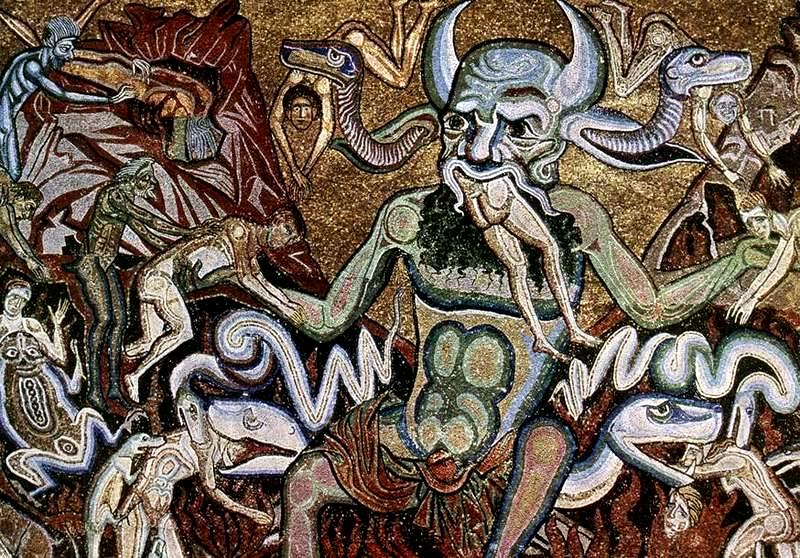
The magics available in the city's defence would be immensely varied and unpredictable, much to the inhabitants' advantage.
 |
| That which awaits |
The nature of the city itself might be quite dramatically varied also, with a stone basal ring, but then with towers and walls based on the whims and abilities of each quarter's inhabitants. In some parts, demonic organics may yet hold sway. Given the proximity of Hell and the abilities of many of the inhabitants, the old 'non-Euclidean' description could fit very well. The powers invoked during a Great Contest might have been required to make any headway against them at all.
 |
| One survivor's memories of what he saw as part of the ritual at the Great Contest |
Tuesday, 12 July 2016
Linguistic Features of Pent
The Language of Pent
The first and most important point to realise is that
‘Pentan’ as a language has only existed since the Seleran Empire produced a patois that permitted communication
between the very disparate elements of the army. Prior to that there were distinct languages
spoken within major tribal groupings and in specific regions that were not
mutually intelligible. The languages of
the Gamatae mixed with those of Nivorah, Dara Happa and Pelanda and numerous
fragments of Peloria to produce a wild blend with local outcomes.
Sins of Omission
A great deal of what makes a language stand out can be
summed up in what it does not do! Initial sounds make a great impression, and
what may be said of Pentan is that it lacks several of those which occur in
Dara Happan and other ‘Firespeech’ languages.
E, M, N, P, Qu/Kw, S, W or X.
This indicates that Pent is not a Pentan word.
 |
| An Emperor of Dara Happa returning in triumph to Raibanth |
DH W Pent C Pent N& E Pent
Yelm Alm Am 'al
Murharzarm Burharzarm Burharsharm Burarsharng
Khorventos Khorventos Korvaindosh Korvengkoth
Ovosto Ovosto Ai'osto Ovotho
Orogoros Orokoros Airogoros Orogoroth
Oravinos Orafinos Aira'inosh Ora'inoth
Anaxial Anazial Anashial 'angatheel
Lukarius Lukarius Lukariush Mlookareeth
Urvairinus Urvairinus Urvairinush Urvairinuth
Kestinoros Kestinoros Kaishtinorosh Ketinoroth
Manarlavus Banarlafus Banarlafush Banarlavuth
Vanyoramet Vanyoramet Vanyoramait Vanyaranget
Manimat Banibat Banibat Banibat
Kazkurtum Kazkartum Kashkartum Kathkartoon
Jenarong Jenarong Jainarong Jenarong
Gerruskoger Gerruskoger Gairukshogair Gerungkogger
Vuranostum Vuranostum Vuranostum Vuranothun
Huradabba Huradabba Huraddaba Uratanga
Dardaggus Dardaggus Dardangush Dardaguth
Kerunebbe Kerunebbe Kerunaibao Kerunengee
Dagguneri Dagguneri Dangunairi Daguneri
Kestinendos Kestinentos Kekshinaintosh Kethinengkoth
Illadarga Illadarga Ai'addarga Ilatharga
Viramakradda Viramakradda Viramakshradda Virangakada
Eusibus Yusibus Yusibush Yusi'uth
Harkaztem Harkaztem Harkashtaim 'arkatheng
Khordavu Khordafu Kordafu Kordavu
Anirmesha Anirbesha Anirbaisha 'irbetsa
Wanthanelm Anthanalm Andanam 'antanal
Anirdavu Anirdafu Anirdafu 'angirdavu
Erraibdavu Arraibdafu Araibdafu 'arai'davu
Mahzanelm Bahzanalm Bashanam Bathanal
Erzanelm Arsanalm Ashanam 'erthanal
Khorzanelm Khorsanalm Korsanam Korsanal
Radaidavu Rataidafu Rataidafu Grataidavu
Anirestyu Anirastyu Anirash'yu 'anirathyu
(Nysalor) Byzalor Buesha'or Bithalor
(Ordanestyu) Ordanastyu Oddanashyu Danathyu
Erzanestyu Arsanastyu Ashanash'yu 'arsanathyu
Anirinelm Anirinalm Anirinam 'anirinal
Raibmesha Raibbesha Raibaisha Grai'etha
Elmharsnik Almharsbik Amharshbiksh 'alarik
Sothenik Zothanik Sotaniksh Zothanik
Helemshal Helamshal He'msha 'elangshal
Vorandevu Vorandefu Voranddaifu Vorangdaivu
Fenaldevu Fenaldefu Fainaddaifu Vengaldevu
Asvekhordevu Asvekhordefu Ashvekshoddaifu 'asvengkordevu
Desikselm Desiksalm Daisiksham Daithingksal
Desikanir Desikanir Daishikshanir Daithingkanir
Verendekelm Verantakalm Vairandaksham Verantakal
Denesiod Debeziot Daibaishiat Denethot
Elmesiod Albeziot Abaishiat 'albethot
Dismesiod Disbeziot Dishbaishiat Dithbethot
Elmexdros Almazdros Amashdrosh 'alathoth
Dismexdros Disbezdros Dishmekshdrosh Dithbethoth
Karmexdros Karmazdros Karmakshdrosh Karmathoth
Elmatryan Almatryan Amadd'an 'alat'an
Dismatryan Disbatrayan Disbadd'an Disbatrayan
Ulikarelm Ulikaralm Uddiksharam Ulingkaral
Dismanthuyar Disbanthar Disbandar Dithbantar
Karvanyar Karvanyar Karvanyar Karvanyar
Sarenesh Zaranash Saranash Zaranath
Heredesh Heratash Hairatash 'eratath
Karsdevan Karsdefan Karshdeban Kardevan
Karsdevesus Karzdefasus Karshdebasus Kardevathuth
Kewetdesh Ketdesh Kaiddesh Ketdeth
Kewetdevsus Ketdevsus Kaiddebsus Ketde'ooth
Kumardesh Kubardesh Kumaddaish Ku'ardeth
Khorviramaka Khorvirabaka Korvirabaksha Korvira'ka
Kumarstyu Kumarstyu Kumar'u Kungathyu
Kumardros Kumartros Kumartrosh Kungatroth
Alenvus Alanfus A'anfush 'alangooth
Khorkestinus Khorkastibus Korkashtibush Korkathoos
Kumardroni Kubertrobi Kuber'obi Kubertsobi
Kewetdroni Ketrobi Kai'obi Ketsobi
Vinyartyu Vinyartu Vinyartyu Vingyartu
Spengatha Zbengatha Saingata Zbeggatha
Yelmgatha Yelmgatha Yaimgata Yelgatha
Vinyargatha Vinyargatha Vinyargata Vinyargatha
Desderius Desderius Daisdairiush Dethderooth
Vinyardavu Vinyardafu Vinyardafu Vinyardavu
Elmexdavu Almazdafu Amashdafu 'alathdavu
 |
| A Pentan mirror-back depicting warfare against Kastoki raiders |
With much gratitude to Tindalos for access to some of his (as yet unpublished) magnum opus on the language of Dara Happa.
Thursday, 7 July 2016
A scholar's approach to the Gopher people
The Gor-Dun Precursor Culture
It is the purpose of this paper to indicate that there
was once a culture, or series of cultures, spread across Pent. I hope that the department will look upon
this with generosity of spirit, and will not dismiss it as has been my
experience with my previous three monographs.
Site 1 (Named as
Falber Hill By my Red Haired guards)
- -
II I
which I suggest is a stylised Gopher face.
I first invoked protective wards against any remnant
curses, wary of the terrible Fist Of Pain, removed the monoliths (which may now
be viewed in Annex 3B) and laid out a
standard Buserian Grid Of Inquiry over the mound. Our Divine Master guided the process of the
dig, which resulted in laying bare a burial site.
The ashes of the deceased were sealed within a pear-shaped
ceramic vessel, and accompanied by the following grave goods: A notched spear-thrower, engraved with a
stylised gopher
A
stone statuette of a pregnant female human
Multiple
flint arrowheads
These may also be viewed in Annex 3B.
There was, however, one very interesting inclusion of a
reindeer with a solar disc impaled on its antlers, pursued by a human on
skis! Is it too much to conjecture that
this might be the Gor-Dun myth of the loss and return of Yelm Invictus?
Site 3 (Named by
the guides, but I was placed under a gaeas not to reveal it)
Avoiding a Korer raiding party, we took refuge in the lee
of a hill, which revealed itself to be a shaft grave! On my own, I was insufficient to lay out an
effective Grid Of Inquiry over the whole hill, and had to undertake excavation
in a less than adequate style. However,
Our Immortal Teacher led me to an inner chamber after but three nights of
excavation. This chamber was about eight
paces across, and rooved throughout with mammoth bones, which proved sturdy
after who knows how many years? (My
request for information failing to elicit The Great Lecturer’s grace)
Within were found six pots of the type encountered at
Site 1, accompanied by a scattering of ivory shards and flint arrow heads. Here, however, each pot bore upon it the
symbols noted on the monoliths from Site 1, painted in red. I conjecture these to be the spirit forms of
the dead, but they were long past contacting, or so it seemed.
The night after opening the chamber our camp was attacked
by six ghosts howling unknown words.
They were weak, and easily driven off.
Site 4 (Un-named)
A series of nine monoliths across a valley. These were rough and uncarved, and in two
cases shattered. However, the fact that
they were perfectly aligned indicates sentient origin.
After two lunations journey to the east, into a most arid
region, we came across a complex site with three mounds, a hillock bisected by
a line of stakes; and numerous petroglyphs of gophers, humans, hsunchenised
human-gophers, bison and mammoths. While
the petroglyphs deserve no special description (although small examples may be
found in Annex 3B) the other four deserve special mention. In many ways, this was the most productive site,
although seemingly of a quite different culture, or possibly two cultures.
The other four appeared to be female, with numerous
armlets and anklets of pierced beads.
5B The
second mound was poorly built and had collapsed inwards long ago. Using this weak point, I was able to safely
unearth three skeletons, all arrayed as per the presumed females in 5A.
5C The
third mound had no active defences, which was a surprise given the
contents. It appeared to be a female
shamanic individual, with a variety of unusual items which may be viewed in
Annex 3C. The remnants of a cloak
appeared to have been covered in circles of ivory, each marked with unknown
runes. Some of these contain animal
spirits. She also had a copper hand
mirror of Sairdite manufacture, bearing on the reverse a scene of three dogs
chasing around the exterior and Jajagappa the accursed in the centre. A well preserved leather cauldron was
flattened and used as a pillow.
5D The
hillock was bisected north/south by the stakes, which averaged two hand spans
beneath and four above the soil. Many
had fallen, and several showed signs of fire-hardening of the tips.
North of the line there were no finds, whereas south of
the line there were fifteen pot burials.
The pots were long and tubular (Cf Annex 3C) and filled with the bones
of the deceased. No other grave goods
were to be found.
There being no time remaining for further explorations we
returned to the Red Hair Place swiftly, and thence to this temple.
I believe that there can be no cause for doubting that
the exhumed dead were Gor-Dun, nor that the cultures indicated were higher than
that which we at present see. I would
conjecture that either their culture collapsed under Gamatae pressure, or that
we do not see all of their present culture.
I request funding for a further expedition in the coming
season.
Delardios Caranhir, Field Researcher Minor.
Thursday, 9 June 2016
Traderoutes across Pent
The Great Amber Path
Despite the name, this route involves the trade of a great many northern goods into the heart of Pent, and then to the edge of Prax. When the weather allows, trade is frequent.
Gathering points within Lentasia muster caravans carrying sealskin, whale ivory, dried fish and amber. They then proceed along the Elyu-Ene to the foothills of the Rockwoods, from whence they head to the Hellcrack. In these travels they will trade for Hazia, Date Wine and items of Teshnan craft. At the Hellcrack they will trade for anything with an Otherworld origin. Finally, the hardiest will cross into Prax, trading with the Oasis People at Eggs On Rocks Oasis. Returning northwards they will carry spices, slaves, strange feathers and leathers, and the horrendously priced Hundred Season Eggs prepared by the Oasis People. They will trade for foodstuffs, fabrics and hazia to take into the north.
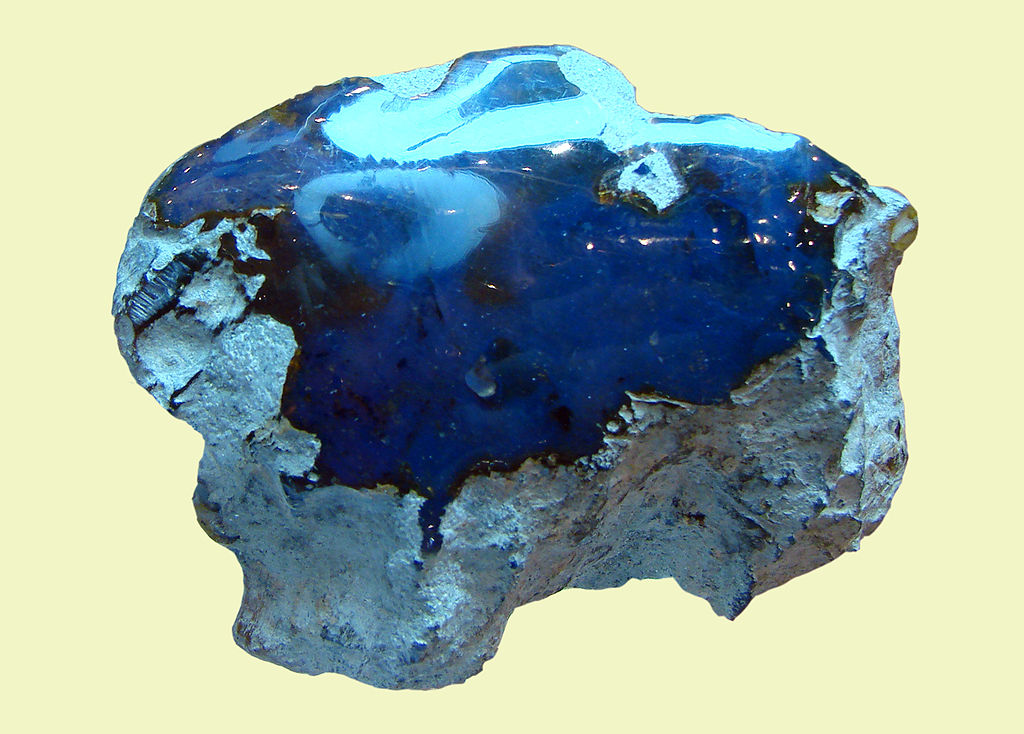 An unusual piece of blue amber, sacred to the White River
The Iron Road
Seldom travelled more than once a year due to the costs involved, this is the route by which iron might normally enter Pent.
From Palaspar the route passes north of the Von Mountains (to avoid the Red Hair Tribe) and thence through the Hurran Bor. Passing along the West King's Highway and past Thunder Butte it reaches the Sirdaryo, and thence to the Hot Lake. Iron may be traded all along this route, but the price is generally astronomical, given that the best trade will be at the Hot Lake. From the Hot Lake the caravan carries smoked shellfish, elephant ivory, sugar beet, metal ores and gemstones.
The Demons' Track
This is a high value route, accompanied by dangers and only used by the strongest caravans. Magical items pass along it, accompanied by other goods.
From Zangshi Kinool the route leads to the Hot Lake, carrying items relating to the faiths of Chern Durel. Trading will be done for decorative wares, slaves and hazia. From there the track proceeds down the Sirdaryo to the Hellcrack. Here there is a lively trade for Otherworldly goods. Finally the caravans pass on to the Tower of Orathorn. This is the end spot for any slaves, and remaining magical goods. Heading back they will carry bizarre magics from Orathorn, picking up more from the Hellcrack, and hazia and slaves from the Hot Lake.
 Charm containing a great Sandfox spirit from Orathorn
Woodway
This is a source of strange spices and unusual spirits. It is only undertaken during the warmest summer weeks.
Caravans gather at the Hot Lake, bearing sugar beet, Teshnan crafts (except worked wood!), rice and such seeds as have been gathered from the Steppe.
From the Hot Lake the Woodway travels down the Sirdaryo, and thence to the West King's Highway. From here it passes to the Sky King Mountain, where the rice is traded to the nearby clans. Avoiding Gork's Hills as far as possible, it then proceeds to a point south of Griffin Mountain to trade with the Aldryami. There the beet, seeds and crafted items are traded for the seeds and stamens which are used for many spices, and for such captive spirits as the Aldryami cannot utilise.
 Er'oring peppercorns
Despite the name, this route involves the trade of a great many northern goods into the heart of Pent, and then to the edge of Prax. When the weather allows, trade is frequent.
Gathering points within Lentasia muster caravans carrying sealskin, whale ivory, dried fish and amber. They then proceed along the Elyu-Ene to the foothills of the Rockwoods, from whence they head to the Hellcrack. In these travels they will trade for Hazia, Date Wine and items of Teshnan craft. At the Hellcrack they will trade for anything with an Otherworld origin. Finally, the hardiest will cross into Prax, trading with the Oasis People at Eggs On Rocks Oasis. Returning northwards they will carry spices, slaves, strange feathers and leathers, and the horrendously priced Hundred Season Eggs prepared by the Oasis People. They will trade for foodstuffs, fabrics and hazia to take into the north.
An unusual piece of blue amber, sacred to the White RiverThe Iron Road
Seldom travelled more than once a year due to the costs involved, this is the route by which iron might normally enter Pent.
From Palaspar the route passes north of the Von Mountains (to avoid the Red Hair Tribe) and thence through the Hurran Bor. Passing along the West King's Highway and past Thunder Butte it reaches the Sirdaryo, and thence to the Hot Lake. Iron may be traded all along this route, but the price is generally astronomical, given that the best trade will be at the Hot Lake. From the Hot Lake the caravan carries smoked shellfish, elephant ivory, sugar beet, metal ores and gemstones.
The Demons' Track
This is a high value route, accompanied by dangers and only used by the strongest caravans. Magical items pass along it, accompanied by other goods.
From Zangshi Kinool the route leads to the Hot Lake, carrying items relating to the faiths of Chern Durel. Trading will be done for decorative wares, slaves and hazia. From there the track proceeds down the Sirdaryo to the Hellcrack. Here there is a lively trade for Otherworldly goods. Finally the caravans pass on to the Tower of Orathorn. This is the end spot for any slaves, and remaining magical goods. Heading back they will carry bizarre magics from Orathorn, picking up more from the Hellcrack, and hazia and slaves from the Hot Lake.
Charm containing a great Sandfox spirit from OrathornWoodway
This is a source of strange spices and unusual spirits. It is only undertaken during the warmest summer weeks.
Caravans gather at the Hot Lake, bearing sugar beet, Teshnan crafts (except worked wood!), rice and such seeds as have been gathered from the Steppe.
From the Hot Lake the Woodway travels down the Sirdaryo, and thence to the West King's Highway. From here it passes to the Sky King Mountain, where the rice is traded to the nearby clans. Avoiding Gork's Hills as far as possible, it then proceeds to a point south of Griffin Mountain to trade with the Aldryami. There the beet, seeds and crafted items are traded for the seeds and stamens which are used for many spices, and for such captive spirits as the Aldryami cannot utilise.
Er'oring peppercornsWednesday, 8 June 2016
Trade goods of Pent
The Lunar caravan is well known, and is reliably led by the Red Hair Tribe on routes that do not reveal the strength and semi-settled population that is building around the Hot Lake. It carries the wealth of Peloria eastwards, and bring that of the east homewards. However, it is not the only trade route, nor are these the only trade goods that cross the steppes.
Most trade is done on the small scale between clans and settled communities. There are many goods that can be found throughout Pent, provided you know where to go or are willing to search. These include the herded and domesticated beasts of Pent and their products, including horn and antlers, wool and hide, felt and leather, meat and milk products, hoof and bone.
The relevant creatures include horse, pony, dog, cattle, pig, goat, donkey, reindeer.
However, some areas have herds others do not.
Zebu and sheep may be found in all areas apart from the north, while the few elephants the Teshnans have are only to be found near the Hot Lake.
 A local trader in the Hot Lake area
Similarly the vegetables grown in the small farms of the settled and semi-settled communities can also be found in many parts of the steppe.
In all but the north may be found sources of barley, flax, fruit, and hazia.
The west provides opium, central Pent produces nuts and dates, with the nut oil and date wine that result, while the east has rice paddies and sugar beet fields.
If you are willing to trade with the Uz, they gather many plants from their marshlands.
Hunting and Fishing
Fish abound in the rivers and lakes of Pent, and the listing of animals for each area will indicate what may be hunted, and the materials to be gained from these can form a local resource.
For example, mammoth ivory from the north is much prized, as are seal-skin coats from the White Sea littoral. Whale fat is a valuable source of oil, and what may be harvested from a giant arthropod can be both rare and valuable. The Hot Lake is a ready source of shellfish.
 A whale ivory shield
Minerals etc.
The Teshnan settlements in the southern regions produce worked metal, wood, shell and beads.
Hyaloring metalwork comes from the western and central steppes. Lentasian amber comes in a variety of colours, the colour determining who will buy and for how much. Occasional mines in the east produce metal ores and precious gems. Ivory comes from the north - Mammoth and Whale - and the Hot Lake - Elephant. The Chern Durelites of the east produce carved stone of all dimensions in their ancient native - and often horrible - style.
Slaving
This is common practice, and may be found in all areas.
Most trade is done on the small scale between clans and settled communities. There are many goods that can be found throughout Pent, provided you know where to go or are willing to search. These include the herded and domesticated beasts of Pent and their products, including horn and antlers, wool and hide, felt and leather, meat and milk products, hoof and bone.
The relevant creatures include horse, pony, dog, cattle, pig, goat, donkey, reindeer.
However, some areas have herds others do not.
Zebu and sheep may be found in all areas apart from the north, while the few elephants the Teshnans have are only to be found near the Hot Lake.
A local trader in the Hot Lake areaSimilarly the vegetables grown in the small farms of the settled and semi-settled communities can also be found in many parts of the steppe.
In all but the north may be found sources of barley, flax, fruit, and hazia.
The west provides opium, central Pent produces nuts and dates, with the nut oil and date wine that result, while the east has rice paddies and sugar beet fields.
If you are willing to trade with the Uz, they gather many plants from their marshlands.
Hunting and Fishing
Fish abound in the rivers and lakes of Pent, and the listing of animals for each area will indicate what may be hunted, and the materials to be gained from these can form a local resource.
For example, mammoth ivory from the north is much prized, as are seal-skin coats from the White Sea littoral. Whale fat is a valuable source of oil, and what may be harvested from a giant arthropod can be both rare and valuable. The Hot Lake is a ready source of shellfish.
 A whale ivory shield
Minerals etc.
The Teshnan settlements in the southern regions produce worked metal, wood, shell and beads.
Hyaloring metalwork comes from the western and central steppes. Lentasian amber comes in a variety of colours, the colour determining who will buy and for how much. Occasional mines in the east produce metal ores and precious gems. Ivory comes from the north - Mammoth and Whale - and the Hot Lake - Elephant. The Chern Durelites of the east produce carved stone of all dimensions in their ancient native - and often horrible - style.
Slaving
This is common practice, and may be found in all areas.
Monday, 6 June 2016
Bo Shan and the Hot Lake States
It must be remembered that Bo Shan's journeys belong to history, and what is to be found at the Hot Lake in the post-Seleran Empire period will be profoundly different.
Entering the Concealed Region
My guides finally condescended to take me to the region that they named 'Hidden Riches', which is a land of many minor settled peoples, and some who roam during the warmer times and huddle around the sources of warmth during the impossibly cold winters of this land. If only they would embrace Solf, their inner flames would keep them hot, but their servitude to the Kargzant spirit or the Ignorant demon suns of Karn Torail keep them in poverty.
After crossing the sand-river we came to a place rugged and barren, before the land became even more broken yet wooded, which put me in mind of our own northern foothills, although the trees are quite different. I was informed that we were now in the land of the KenKen, a people who followed the faith of Karn Torail.
KenKen
The people of this land are much divided, with most showing little refinement while the king and the priestly caste wear clothing of Dragon Empire origin and are -for the most part - literate. I was advised to avoid any appearance of missionary work, since they do not even tolerate Pentan shamans here. We experienced little welcome, although there was trading to be done. After twenty days we moved on, and upon cresting a rise of the borders of the Hli-Ul I had my first sight of the Hot Lake itself, a wonder in the midst of this parched land.
Hli-Ul
From the rise I could see cultivated fields stretching towards us, petering out and turning to pasture as the land ascended. The Hli-Ul are relatively prosperous and happy, and without exception follow the religion of Basko, the Black Sun of which I wrote in my volume concerning Karn Torail.
Food is gathered and stored in common, and all the people receive a ration as decided by the High Priest. Remarkably, he eats no more than does the lowliest free member of the kingdom. By contrast they treat their slaves with great cruelty, and they are half-starved at all times.
The Great Keep of Hli-Ul is a poor thing of mud-brick, and although the High Priest rules from here, it is not military might but religious power that keeps the land independent safe.
While we were there, the Rekindling Festival took place. A rough-hewn wooden statue of Basko was placed within a four-wheeled image car, in appearance like a hollow step-pyramid, and wheeled throughout the whole country before coming to rest outside the Great Keep. The car was set alight with much pagan singing and blood-letting, and when the smoke cleared and the embers cooled, a black jade statue of Basko was revealed, transformed by the prayers and dire magics of the priests.
I was told that there was a plan to build a mighty stone pyramid to replace the Great Keep, and the work would be a full eighty years in the doing. Neither on this journey nor my subsequent return did I see any sign that any foundations had been laid.
I was pleasantly welcomed by the High Priest, but he showed no interest in the Great Truths.
After thirty seven days we moved on to another lakeside land, Tse-Huo, which is split from Hli-Ul by a stretch of wooded ravines.
Tse-Huo
Tse-Huo is as different from the preceding lands as may be imagined. The people are of that Pentan type named Darkusite, a people so fierce they are almost bestial. They were in the midst of what they name their 'Five Year Assembly', and all of their clans were camped along the water's side.
The clan encampments were very colourful, with silk banners and streamers marking every chieftain's and shaman's tent. Although they showed off their ferocity in their Assembly Games, they were surprisingly courteous to us, treating our arrival as a good omen for reasons which remained unexplained.
The Great Khan of the people was in possession of a mighty religious relic, the Skull of Darkus, and the people gathered to venerate it while lashing and cutting themselves. The violence of their Games becoming repulsive, we stayed but eight days before moving on.
Talilo
Crossing several streams we came into a land inhabited by a people of mixed ancestry, Pentans and Karnites, happily living alongside each other. Their ruler is of the Eyaloran Pentans, and is named
the Beauteous Horseman. Their Great Keep is an extensive warren of stone and mud brick, much adorned with statues and masks of the Karnite demons, but topped with Eyaloran prayer flags.
The Karnites tend rice fields and fish in the streams of the land, while fearing to fish or gather at the lakeside. The Pentans hunt widely over the plains to the south west of the lake.
I had some success interesting some of the Pentans in Solf's Great Truths, but one of their shamans intervened, chastising them with a blazing spirit.
The shamans of this land are many and varied, and have no accepted leaders.
The Beauteous Horseman was actually a pock-faced brute, a drunkard with numerous children.
On my later visit I found the Pentans absent, and was told that there was a contest in progress to determine who would inherit the title now that the old man was dead.
Ochsha
The eastern extremity of the lake is held by the Ochsha, and amongst them I felt truly endangered.
The people are Darkusite and more feral than their Tse-Huon kin to an astonishing degree.
The clan leaders are constantly feuding to see who will hold the title of Jakhan, and skirmishes are a perfectly normal occurrence! The men are naturally hard and greatly given to falsehood, for which they feel no shame, but rather account it a sign of intellect. The women are repulsive, and thankfully obscured from normal view by leather hoods.
They are, however, one of the most devout peoples I have ever met in my travels. Indeed, they sacrificed my horse to Kargzant with great glee, and gave me the roast generative bodies to eat at the subsequent feast.
I did not trouble to revisit them, and gather that their lives remain as they were then.
Bandelkun Castle
Bandelkun is a mixed population, Karnite, Eyaloran and Hayar-Anmador Pentan. They are a well organised state, and very martial in their attitudes, brought on not least by their proximity to the Ochsha.
The Castle itself is the most impressive of the fortifications around the lake, although that is a simple thing to achieve! It is built exclusively of stone, faced with white plaster and painted with a variety of curses to ward off attackers. The people are well provided for, with rice, almonds, a variety of fruit and plentiful hunting. If one of the states was too unite all the lands of the Hot Lake, I am sure this would be it. The riders are well armed with lance and bow, their foot with mace and sling, and both are well supplied with heavily quilted armour.
Their Hayar-Anmadoring King is well supplied with counsellors and magicians.
We spent almost sixty days as his guests, talking of all the lands I had visited. When we left, he gifted me with an astounding steed with many magical powers.
The lands between Bandelkun and KenKen on the north side of the lake are waste at the present, although there are clear evidences of previous inhabitation. I have heard much concerning a goddess
of the lake, but I saw neither temple nor shrine dedicated to her alone. However, before we left that region my guides insisted on binding the arms and legs of three of our slaves and throwing them into the waters as a sacrifice.
Such is the savagery of those who I had come to think of with some affection.
Entering the Concealed Region
My guides finally condescended to take me to the region that they named 'Hidden Riches', which is a land of many minor settled peoples, and some who roam during the warmer times and huddle around the sources of warmth during the impossibly cold winters of this land. If only they would embrace Solf, their inner flames would keep them hot, but their servitude to the Kargzant spirit or the Ignorant demon suns of Karn Torail keep them in poverty.
After crossing the sand-river we came to a place rugged and barren, before the land became even more broken yet wooded, which put me in mind of our own northern foothills, although the trees are quite different. I was informed that we were now in the land of the KenKen, a people who followed the faith of Karn Torail.
KenKen
The people of this land are much divided, with most showing little refinement while the king and the priestly caste wear clothing of Dragon Empire origin and are -for the most part - literate. I was advised to avoid any appearance of missionary work, since they do not even tolerate Pentan shamans here. We experienced little welcome, although there was trading to be done. After twenty days we moved on, and upon cresting a rise of the borders of the Hli-Ul I had my first sight of the Hot Lake itself, a wonder in the midst of this parched land.
Hli-Ul
From the rise I could see cultivated fields stretching towards us, petering out and turning to pasture as the land ascended. The Hli-Ul are relatively prosperous and happy, and without exception follow the religion of Basko, the Black Sun of which I wrote in my volume concerning Karn Torail.
Food is gathered and stored in common, and all the people receive a ration as decided by the High Priest. Remarkably, he eats no more than does the lowliest free member of the kingdom. By contrast they treat their slaves with great cruelty, and they are half-starved at all times.
The Great Keep of Hli-Ul is a poor thing of mud-brick, and although the High Priest rules from here, it is not military might but religious power that keeps the land independent safe.
While we were there, the Rekindling Festival took place. A rough-hewn wooden statue of Basko was placed within a four-wheeled image car, in appearance like a hollow step-pyramid, and wheeled throughout the whole country before coming to rest outside the Great Keep. The car was set alight with much pagan singing and blood-letting, and when the smoke cleared and the embers cooled, a black jade statue of Basko was revealed, transformed by the prayers and dire magics of the priests.
I was told that there was a plan to build a mighty stone pyramid to replace the Great Keep, and the work would be a full eighty years in the doing. Neither on this journey nor my subsequent return did I see any sign that any foundations had been laid.
I was pleasantly welcomed by the High Priest, but he showed no interest in the Great Truths.
After thirty seven days we moved on to another lakeside land, Tse-Huo, which is split from Hli-Ul by a stretch of wooded ravines.
Tse-Huo
Tse-Huo is as different from the preceding lands as may be imagined. The people are of that Pentan type named Darkusite, a people so fierce they are almost bestial. They were in the midst of what they name their 'Five Year Assembly', and all of their clans were camped along the water's side.
The clan encampments were very colourful, with silk banners and streamers marking every chieftain's and shaman's tent. Although they showed off their ferocity in their Assembly Games, they were surprisingly courteous to us, treating our arrival as a good omen for reasons which remained unexplained.
The Great Khan of the people was in possession of a mighty religious relic, the Skull of Darkus, and the people gathered to venerate it while lashing and cutting themselves. The violence of their Games becoming repulsive, we stayed but eight days before moving on.
Talilo
Crossing several streams we came into a land inhabited by a people of mixed ancestry, Pentans and Karnites, happily living alongside each other. Their ruler is of the Eyaloran Pentans, and is named
the Beauteous Horseman. Their Great Keep is an extensive warren of stone and mud brick, much adorned with statues and masks of the Karnite demons, but topped with Eyaloran prayer flags.
The Karnites tend rice fields and fish in the streams of the land, while fearing to fish or gather at the lakeside. The Pentans hunt widely over the plains to the south west of the lake.
I had some success interesting some of the Pentans in Solf's Great Truths, but one of their shamans intervened, chastising them with a blazing spirit.
The shamans of this land are many and varied, and have no accepted leaders.
The Beauteous Horseman was actually a pock-faced brute, a drunkard with numerous children.
On my later visit I found the Pentans absent, and was told that there was a contest in progress to determine who would inherit the title now that the old man was dead.
Ochsha
The eastern extremity of the lake is held by the Ochsha, and amongst them I felt truly endangered.
The people are Darkusite and more feral than their Tse-Huon kin to an astonishing degree.
The clan leaders are constantly feuding to see who will hold the title of Jakhan, and skirmishes are a perfectly normal occurrence! The men are naturally hard and greatly given to falsehood, for which they feel no shame, but rather account it a sign of intellect. The women are repulsive, and thankfully obscured from normal view by leather hoods.
They are, however, one of the most devout peoples I have ever met in my travels. Indeed, they sacrificed my horse to Kargzant with great glee, and gave me the roast generative bodies to eat at the subsequent feast.
I did not trouble to revisit them, and gather that their lives remain as they were then.
 |
| A fanciful rendering of Bandelkun Castle in the Zanozar edition |
Bandelkun is a mixed population, Karnite, Eyaloran and Hayar-Anmador Pentan. They are a well organised state, and very martial in their attitudes, brought on not least by their proximity to the Ochsha.
The Castle itself is the most impressive of the fortifications around the lake, although that is a simple thing to achieve! It is built exclusively of stone, faced with white plaster and painted with a variety of curses to ward off attackers. The people are well provided for, with rice, almonds, a variety of fruit and plentiful hunting. If one of the states was too unite all the lands of the Hot Lake, I am sure this would be it. The riders are well armed with lance and bow, their foot with mace and sling, and both are well supplied with heavily quilted armour.
Their Hayar-Anmadoring King is well supplied with counsellors and magicians.
We spent almost sixty days as his guests, talking of all the lands I had visited. When we left, he gifted me with an astounding steed with many magical powers.
The lands between Bandelkun and KenKen on the north side of the lake are waste at the present, although there are clear evidences of previous inhabitation. I have heard much concerning a goddess
of the lake, but I saw neither temple nor shrine dedicated to her alone. However, before we left that region my guides insisted on binding the arms and legs of three of our slaves and throwing them into the waters as a sacrifice.
Such is the savagery of those who I had come to think of with some affection.
Subscribe to:
Posts (Atom)